Thursday, April 23, 2015

Three Short Story Ideas

Week 7 of Narrative Writing class, this week, our exercise is to develop three story ideas. These will then be discussed and 'pitched' in class to help everyone decide which one they will work up into 3,000 words. Here was the brief: 

"We'll be discussing essential short fiction components and everyone should bring three ideas to pitch as their short fiction writing ideas. Think of pitch as a sales endeavour and be prepared to sell your ideas. Practice spending a two minutes talking up each of your ideas. We'll discuss their merits together."

Here are my three story ideas: 

Butterface
Vida Butterface lives alone above Café Fountain, in Sydney’s King’s Cross. She lives alone and suffers from lipodystrophy which means she has a very old face but a young body. Kings Cross is not just her home because it’s where she lives. It’s home because amongst the history and sleazy reputation lies a groundswell of acceptance – from the newly-moneyed in their fancy apartments to the downcast who line up outside the Wayside Chapel for a chance to feel human, if only for a few hours. When Vida joins the Honeybees she realises that competition is a level playing field, where the only thing that matters is what you bring, not the package it comes in.

Death Dog
A dog that can smell death approaching other dogs. Sarah, lonely and naïve, who wanted to feel connected to the community. The creepy old man in the lace-fringed mansion. Jewel-encrusted taxidermied domestic pets. An alluring and unsettling new interior decorating trend shaking the foundations of the sparkling, seaside suburb of Mosman. A community of people who run out of fingers to point when their bubble is burst.

Georgina Saint vs Emily Drake
When she started at the small accounting firm, Drakedorf, Georgina could only see her own reflection. Am I wearing the right clothes? Will they regret hiring her? But as she approached the threshold of the third week in her new job (no-one else had lasted so long, the agency were thrilled) the questions started to change. ‘She’s a monster’ whispered one in the bathroom. ‘How is it with Her Ladyship?’ fished another as they both waited for their print outs. And then there was the computer files – a tome of biblical proportions, where ex-colleague A begat ex-colleague B and together went down in the annals of the firm and became the legends of those who went before – a trail of fingerprints and hand-written notes in the margins of scanned documents. Myths of immediate summarial dismissals. Frogmarched from offices by the khaki-clad sentries. Torturous written warnings. Would Georgina join the league of those who had since departed or would she confront Emily Drake, the boss who imprisoned the good actuaries of Drakedorf? Or should she follow her hunch that modern office politics are simply the playing field for mental imbalance and psychopaths, and not trust her colleagues?

I can't wait to see which story 'sticks'. I think of stories as characters, living organisms capable of independant movement. They buzz and whirr and feed in my mind, but sometimes only have short life spans or they can grow tall and wide and tangled. 

Monday, January 5, 2015

No room for demons

Image by Robert Ullman
I’ve been listening to the audiobook version of Amy Poehler’s book ‘Yes Please’. There’s a chapter in which she writes/narrates the sad tale of the demon within us all. It’s the horrible voice that sidles up to you and snaps ‘You have way too much cleavage for that dress’ or ‘Purple eyeshadow is not good on you, you look like you have two plums instead of eyes’ and other less PG rated gripes, moans, cackles and swipes. The best thing about the demon voice in Poehler’s audiobook is that it is read by a deep-voiced man. It could be Seth Meyers, Mike Schur, Eileen Poehler, William Poehler, or Patrick Stewart who all have talent credits in her audiobook. Whoever it is, he made the demon sound like a cross between Barry White, a catcall from a building site and that guy who does the love songs and dedications on 101.7FM who makes me feel queasy. That demon voice turned up in my yoga class the other day.

I do yoga in a gym which means two of the four walls are all mirrors. I turned to my right and the demon voice and I caught a glimpse of my arms raised over my head.
‘Ugh!’ said the demon ‘Those arms and you do not belong in this yoga class. They’re too white . . . ‘
‘Shut up, demon’ I said. ‘I’m here to do yoga, not listen to you’.

The demon slunk to the back of the room and hid behind the swiss balls.I kept on with the yoga, enjoying the stretch, breathing in and out.Later, as I stood in Warrior Two, I gazed out beyond my fingertips and again we caught a glimpse of my reflection. I turned away as quickly as I could, but not fast enough.The demon was by my side in a flash.

‘Dear Lord, you look like a lumpy balloon in that singlet top!’ He droned into my ear. ‘Lumpy!! Balloo”
‘F**** off, demon.’ I said ‘I can’t do yoga and listen to you. You’re just going to have to go.’He folded his arms, pouted and disappeared on my next exhalation.


I like that Amy Poehler has given the demon voice a timbre that is not my own.

It makes it easier to differentiate between what the demon says (lies) and what is true (none of it).

Down with demons. Hurrah for clever, smart, funny women.

BTW – if the saying is true that you’re influenced by the 5 people with whom you spend the most time, then lately I’ve been hanging out with Tara Moss, Lena Dunham and now Amy Poehler. I know they’re not really there, but they narrate their own audiobooks and it makes me feel like we’ve had a good sit down and chat.

Thursday, February 6, 2014

The Quitter Chronicle: Life without Facebook - Week 5


Do I have the self-control of a 30 year old . . . or a 13 year old?

And just like that, I was back online.


In a lot of ways Facebook can be as much of a time vortex as shopping can be.


This strange Bermuda Triangle between my need, desire and the enabler (choose between shoe/clothes/homewares/food shopping or Facebook as they all exercise similar powers over me). I can be shopping, decide I need the bathroom, leave the store and head for the bathroom – only to end up there 45 minutes later after I have been to about three stores along the way.


Facebook is much the same. I estimate I have spent about an hour on there over the past week. Not bad, you say? It is if you’ve decided you want a Facebook-free February (and January)!


At least I’m not at the stage where I’m scrolling while I stand, waiting, at the traffic lights. That would be bad.


Not to say that I haven’t enjoyed checking out a few news stories and friend’s updates this past week…

With just three weeks of my challenge left - surely I can give my brain that extra space!?

Monday, February 3, 2014

How long is too long to keep a lipstick?

My current favourite make up range - Inika.
I promise I have no financial affiliation with Inika -
I just like the way it makes my skin look.

Tears on my pillow, petroleum on my cheeks

I'm in the process of changing my cosmetics and skin care from 'I have no idea what's in this stuff, there's a chance it could have been a by-product from the Exxon Valdez oil spill' to 'organic and natural and not tested on animals and ingredients your grandma would recognise from her garden'.

Aging grace-lessly

I'm swapping over my cosmetics and skin care because it no longer makes sense for me to slather chemicals on my face. And I am starting to see lines and wrinkles that aren't just laugh lines, no matter how often I 'fake laugh' into the mirror to see which ones are laugh lines and which ones are just me ageing less gracefully than I would like.

Doing it for the rabbits

I also feel a sense of environmental responsibility - not just to the ecology around me, but also to the animals who are used for cosmetic testing. If I can vote for change with my cosmetic dollars, why not find out what I can and choose products that are good for me? And good for the rabbits? And the carrots that both the rabbits and I like to eat?

One tube at a time

But the scale of the job can seem overwhelming. I've spend hundreds of dollars on these products and I feel guilty throwing them away. Also - I like to think that if one day I want to wear khaki eyeshadow, it will be there for me. But not at the expense of my health.

How long is too long to keep a lipstick?

I stumbled across the following list of how long to keep make up for, in this great article '25 things to throw out today'. I am assuming as well that the timespan refers to those products that have already had a finger, brush or make-up sponge put into them (not unopened ones) as this is where the bacteria gets in.

Lifespan of cosmetics:

  • Mascara: Every three months
  • Foundation: One year
  • Concealer: 12-18 months
  • Powder: 18 months
  • Blush/Bronzer: 18 months
  • Cream blush: 12-18 months
  • Eye shadow: 18 months
  • Eyeliner: 18 months
  • Liquid eyeliner: 6 months
  • Lipstick/lip gloss: 18 months
  • Lip liner: One year
  • Nail polish: One year
  • Makeup sponges: Wash after each use, then throw away after a month.

  • I know I have some stuff older than this! At least this list will make culling the old and rounding up a smaller selection of new products a bit easier.

    Sunday, February 2, 2014

    The Quitter Chronicle: Life without Facebook - Week 4


    I feel like I should have been more specific about the parameters around 'quitting' Facebook.

    New friends, new connections

    Over the past week or so I have made a few new friends, and it was a joy to be able to connect with them through Facebook - to add more the little I already knew about them. I also posted a party invite there.

    So I find myself checking in about once every few days to see if someone has a question.

    Finding moments of peace

    But I'm not trawling constantly whenever I have a spare minute while waiting at the traffic lights or in the coffee queue. Instead I run an errand or two while the barista prepares my daily hit. Or I reply to a text. Or I just stand and enjoy a moment of doing anything.

    I've stopped reading people's updates - not that I don't care, but that the updates will happen when I read them or not and no-one ever had their day made, or ruined, over whether I 'liked' their status or not.

    I'm enjoying the space I have created. I may well stay like this when the end of February rolls around.

    Tuesday, January 28, 2014

    The Quitter Chronicle: Life without Facebook - Week 3

    www.billabongretreat.com.au

    I’m three weeks into my eight week challenge of no Facebook.
     
    Again, I’ve found the need to go back onto Facebook – a need which sprang from a space that had no wifi, no pressure to be on the internet. In fact, it was quite the opposite.
     
    I went on a three day yoga and meditation retreat at the beautiful Billabong Retreat. For three days I ate nothing but organic, vegetarian food, yoga and meditation every day and a massage overlooking a billabong surrounded by towering gum trees and water lilies in full bloom.
     
    So why the desire to connect on Facebook? I met people on the retreat that I had a great time talking to. We helped educate each other about food and wellness. When it came to saying goodbye to these wonderful people, it seemed that the logical way was to connect on Facebook.
     
    So I did. I went back on.
     
    Once the seal was broken I drifted back to it again in an idle moment, but found that most of the news and updates weren’t as interesting as I had once found them.
     
    I also went back onto Facebook as I’m hostinging a party, and Facebook is the best place for setting up events and inviting people. Within the day I had about a third of my invitees accept, which I think was faster than it would have been by email, and certainly by phone.
     
    What I am finding is that Facebook is not having the same role in my downtime than it used to. I’m still on Pinterest quite a bit. I’ve been watching Youtube videos. But I don’t check my phone every time I stop at the lights as I walk across town. And whether it’s because of the peace I feel after Billabong Retreat, or the absence of Facebook, but I am feeling a bit more space in my head at the moment.
     
    Space to let in things like this Pharrell Williams song (yes, I know it’s being overplayed, but that won’t stop me from loving it!)
     

    Tuesday, January 21, 2014

    Anatomy of a LinkedIn Profile


    I’ve been meaning to update my LinkedIn profile. I’ve started working with some international colleagues and it’s helpful for them to get as much info as they can about who I am, and vice-versa.

    Also – it’s a good idea to update your profile every 12 months or so. It can even help with your current role as opportunities may open up that are aligned with, and can build on, your previous experience. Businesses might also approach you with products that are better aligned to your needs. 

    I’ve also been a bit overwhelmed when I look at optimising my profile – so I thought it would be helpful to break it down into smaller pieces. 

    In fact, 14 smaller pieces . . . I present to you my ‘Anatomy of a LinkedIn Profile’:

    1.    Photo – self explanatory.


    2.    Headline – Describes you, not nessecarily your position. 


    3.    Contact info – include as many channels as possible so that people you’re available through their preferred channel. 


    4.    Activity – This is where your LinkedIn posts are listed. It’s a way to remind your connections that you are there, and to position you as an expert (or at the very least – a professional who is passionate about their chosen field of work!). 


    5.    Summary – Here’s a chance for people to get a sense of your ‘voice’ from the way you talk about yourself. Include lots of keywords. Include contact details here too so that people who are not in your network can still contact you regarding the business you’re currently in. This can also be helpful to potential new clients who want to reach you but don’t nessecarily want to share all their info by becoming a connection. Be sure to include media: examples of your work. Even better if they have some images as it will help break up the page. 


    6.    Experience - A chronological listing of your work history. Don’t be afraid to include a lot of detail, so long as it is relevant and you include keywords, sub headings and lists.


    7.    Projects – here’s where you can go into detail about specific projects. This helps highlight your capabilities and that of your employers (past and present). 


    8.    Skills and Expertise - This is where others can endorse you for skills and experience. It only works if you have lots of people who endorse you – which usually happens when you endorse others. The ‘endorse’ function on Linkedin is very ease to use. 


    9.    Education - Here’s where you list all your education including short courses


    10.    Recommendations - A text-based testimonial from someone who has worked with you, and a richer endorsement of you as a professional. Again – works best if you recommend others and others recommend you. 


    11.    Test results – I don’t have any of these on my profile at the moment – but here’s where you can list IQ or personality tests that might help future employers get a sense of the person you are as a team member or manager. Some of the best profiles I’ve seen have included lots of test results. 


    12.    Connections - Connect. Connect. Connect. The more you have, the higher your klout rating and the harder you make Linkedin work for you. If we’re all just 6 connections from Kevin Bacon, you want to make sure you have as many feelers out there as possible. I connect with people I meet at BBQs, friends of friends, colleagues, classmates, past colleagues, the list goes on, as it should. If you never know where a connection will lead, you want to be sure to make it as easy as possible for people to find you. 


    13.    Groups - A good way to demonstrate your commitment to your craft – but don’t join groups you have no intention of interacting with. 


    14.    Following - The groups you follow indicate your personal and professional interests. 


    In the coming weeks I will be updating my profile, and compiling a blog post about how to optimise each section of a LinkedIn profile.

    The Quitter Chronicle: Life without Facebook - Week 2


    I caved. A little.
    I went back onto Facebook for a total of 17 minutes last week.
    In the first instance it was to post a message on a the page that I set up for a writing group within my Masters at UTS. Just a quick note to let them know where, and when, to meet and details of how to contact me if anyone needed to (ie not through Facebook). Total time: 55 seconds.
     
    Sucked into the vortex
     
    The second instance drew me in a bit deeper. I went online to post a message in a women’s fitness group I am part of. I’d interested in a local gym, but had read some bad reviews. I wanted to see if anyone wanted to sell their membership (so I didn’t have to commit to a 12 month membership). I also wanted to see if I could find a workout buddy – or at least someone to laugh along with as I crashed my way through the first couple of dance classes.
    On the way to the Facebook group page I was headed for, I got a bit distracted.
    First by '17 things you want to say in Yoga class, but don’t,'
     
    then 'The Golden Globes most GIF-able moments,'
     
    and finally a heart-melting story about a stranger making a 3 year old’s plane ride the best ever. And it involves turtles.
     
    As the clock ticked over past 10 minutes, I realized that I was being sucked into the vortex of the big, beautiful, digitally connected world. I stopped myself from scrolling any further. I hastily made my way to the page, posted my enquiry, then quickly scampered off the site.
    If you want the low down on the chow down you gotta hit the f'book
     
    On Tuesday I was interested in the Sydney Festival and wanted to check out what catering and entertainment options were available. The entertainment option research was fine – the Sydney Festival website had pretty much all the info I needed. But the catering options? The website had very little useful information and I found I was redirected a number of times to catering supplier’s facebook pages in order to find out what they were offering. I think that marketers have all become too dependant on the ease with which Facebook can be used as a channel to communicate product details. Certainly if I had to manage a website with as much information, from as many sources, as Sydney Festival, I would probably rather link to supplier’s Facebook pages rather than get the relevant information from them. This comment is less a criticism of the Sydney Festival website, but more an observation of the current way marketers, and general punters, use Facebook to communicate and research.

    And that Facebook, for all its time-wasting faults, remains a relevant and contextual channel for connecting with the cities and world we live in.

    Meanwhile, I have been checking my emails a lot less, but pinning a lot more in Pinterest.

    Tuesday, January 7, 2014

    The Quitter Chronicle: Life without Facebook - Week 1

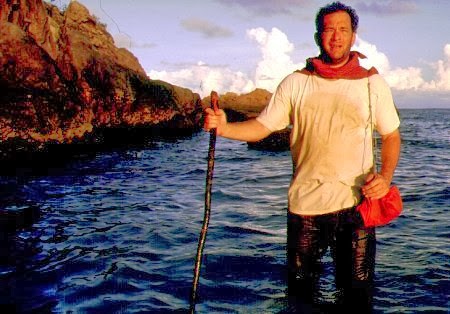
    Tom Hanks in Castaway, from IMDB

    I'm feeling a bit like I'm a castaway on a desert island.

    Quitting Facebook in the first week back at work was probably not the best timing. People are still on holidays (my colleagues who make me laugh, who bring energy and dynamism to our projects, my girlfriends). The work pendulum is still gathering momentum for the start of the year.

    I've been craving connection. I've checked my emails more often than I would like - made worse by the fact that as part of this 'digital fast' I have also unsubscribed from the masses of eNewsletters that I was receiving but not reading. And that people are on holidays (lots of out of office) and are probably still connecting and updating in the way they are accustomed to - via Facebook.

    I've looked as smh.com.au a few times a day - so much so that I have been getting pop-ups warning me that I have almost used up my monthly allocation of free articles, and an invitation to subscribe at a cost. I have been taking for granted that I do stay in touch with the world for free via Facebook. At this stage I can't really see a difference between the journalism on SMH vs Huffington Post - not enough to warrant paying for it.

    But there have been positives too:
    • I played scrabble last night with my housemate (he whipped my butt!)
    • I've written more blog posts than I have in 6 months
    • I've written in my journal most days and been more inward looking, rather than looking outside myself for distractions and solutions
    • I've had time set aside for reading the books on my bookshelves that have sat unread for months
    • I've exercised more, as I don't have the temptation of sitting on the bus trawling social media. It's also been great weather in Sydney, and I felt sloth-like over the break so I'm inspired to walk whenever I can
    • I signed up for this MOOC
    I'm still on track to stay off until the end of February and am content making these observations.

    Wednesday, January 1, 2014

    Why I quit Facebook for two months


    Today I’m quitting Facebook for two months – until the end of February 2014. Here’s why:

    Virtual vs actual connections

    I’ve used the Facebook to replace connecting with my actual social network. Over the past few years I’ve commented on a post rather than calling or emailing or writing a letter. I can go months without calling or contacting any of my friends who are on Facebook, as I can see what’s happening for them through their updates. I’ve allowed a decrease in the amount of contact I have with those who are not on Facebook – unconsciously putting the contact into the ‘later’ basket. This, with friends who I have known for a decade or more. with whom I have travelled continents, mourned broken relationships and celebrated new unions and new lives. I have enabled a computer and a virtual network do this. Lately, this superficial level of contact has been making me feel unfulfilled.

    A possible downfall

    This means inevitably that my virtual social network will decrease. It’s just not possible to maintain contact with all 244 people with whom I am Facebook friends via older methods of communication like phone calls, letters or actual face to face contact. Facebook’s algorithms, and the digital social networks of which I am a part, require me to contribute in order to be a meaningful member of the community.

    This move could even affect my brain. There’s a hypothesis that the size of a social network has a direct correlation with the neuroplasticity of individuals in that network. This article summarises a study that was based on monkeys and the theory applied to Facebook and other social networks.

    However, I’m not a monkey and there are other ways to promote neuroplasticity – some of which I would like to explore. Quitting Facebook will free up my brain space to allow it to work in different ways. 

    Protecting memories

    I’m a Gen X. My early relationships with friends and family unfolded across pages of letters handwritten and posted across the country. I read them now and I’m reminded of the person I was then and that I am now. Facebook moves very quickly and there’s no solution yet as to how to preserve the feeds as historical documents for individuals. Facebook posts also lack the depth that a letter can convey.

    Procrastination

    In the past few months I have procrastinated by trawling Facebook. This video helped me understand why I’ve been doing this. Humans, when faced with a new and daunting task will procrastinate by completing small, insignificant tasks because they are gratified by completing these and ticking them off their mental to do lists.

    In the past few months I’ve had new challenges about which I have been daunted and overwhelmed. I have struggled to develop a clear vision of the end goal and so have gone for the easy way out. Rather than waking each day and considering what lies before me, and visualising how I will approach it so I get what will most make me happy, I have instead rolled over, picked up my phone from my bedside table and checked Facebook to see what the news for the day is. The result of this is that some projects, which could actually make a positive impact on my life, have not progressed in the ways that would make me happy. 

    More reasons to quit

    There are many other reasons to quit Facebook. This Huffington Post article refers to study from the University of Vienna who studied 320 individuals who quit Facebook for several weeks or more. Their primary drivers were:

    ‘worried about who sees their photos, annoyed by Facebook’s constant changes, irritated by superficial social interactions and concerned by how many hours (approx 1.9 hours per day) they spend glassy-eyed and slack-jawed staring at their screens.’

    Not replacing it with other networks

    So what will replace the 1.9 hours of my day that I won’t be on Facebook? One thing I won’t be doing is engaging in other social networks like Twitter or Instagram as suggested by this article in Huffington Post entitled 11 Reasons You Should Quit Facebook In 2014. Online communication has become more visual and our networks want photos of what is happening for us. I recently went a bit far when I sent my team at work a graphic photo of my left eye which had puffed closed and nessecitated a trip to the hospital and a day of leave from work. My team said I had set a precedent for requiring photo evidence of sickness – a suggestion which is unlikely to materialise. However, the ease of taking and sharing photos has meant that communication via images has become more accepted and understood. But this has also meant a decline in our privacy, as every digital image shared has a permanent imprint on the network. Plus, I am a writer. Why would I use a photo to replace what I can illustrate with words?

    Why quit for only two months?
    As a marketer I love social networks. I’ve been lucky enough to live through times when the internet just didn’t exist, to today when it’s part of every day life. I love observing digital communities, being part of them and am grateful every day for the new information and ideas that I see through the friend and pages that I have liked. I joked years ago that I would only ever tweet if someone paid me, but the truth is that my digital inclinations are also part of my offering as a marketer.

    Quitting Facebook for two months is a temporary move. A chance to reconnect with people in different ways. I can still be reached via gmail, Linkedin, this blog, phone and even snail mail.  

    Monday, December 30, 2013

    Best day to buy petrol in Sydney

    This has been me for a long time . . . 


    Image pulled from http://stardust-designs.blogspot.com.au/
    Original artist unknown

    When it comes to money and finance, I have, for the most part, skipped merrily along with little thought about the future and my current spending. There are some pricey things I just won't consider (a Gucci handbag for example). 

    But I have also been ignorant about the real cost of living. I try to set a budget and it falls over. I think it's because I don't actually know how much my daily living expenses cost.

    Over the past few days I have read 'Your Money or Your Life' by Alvin Hall and 'Hot (broke) Messes: How to have your latte and drink it too' by Nancy Trejos. Both have helped me realise that my ostrich mentality has been holding me back from future-planning and protecting myself from possible risks like job loss, illness or even things like my phone or laptop suddenly not working. And that I have been placing my values in spending patterns that don't actually reflect my own values. 

    But that's a post for another day. 

    Today I was curious about the best day to buy petrol. I only fill up my car about once a month, as I generally only use it to drive to see my folks in the countryside. When I do fill up the tank, I do it as a spontaneous and unplanned action. As I see the numbers tick over on the petrol bowser I get a niggling feeling that if I'd plan ahead, I could spend less money on petrol. But an even more niggling sensation has been the knowledge that I really don't have a clue about petrol prices. 

    Entering 'best day to buy petrol in Sydney' into google lead me to this page on the Australian Competition and Consumer Commission's website. 

    In particular I was caught by this graph.


    From: http://www.accc.gov.au/consumers/petrol-diesel-and-lpg/recent-city-petrol-prices
    Apparently petrol is supplied in cycles. These fluctuate based on the cost of transporting it and some other factors which are explained on the ACCC's website. In Sydney it's generally a fortnightly cycle. Buy your petrol around 4 days after the lowest dip in the cycle and you'll pay about 7.5% more to fill up your tank. The last time I filled up the tank of my Toyota Starlet it was $55. So if I had chosen a better point in the cycle, it could have been $51. But then add the discount of a Coles shopper docket and I could have saved even more. 

    Perhaps the overall saving is only $100 per year. Is it really worth it? 

    As this article explains - $10 a month can make a big difference to a mortgage:

    Assuming you've got a $100,000 loan amount set at 4 percent on a 30-year fixed mortgage, that extra $10 payment would save you $3,191.78 over the full loan term. It would also shorten your mortgage by 13 months, meaning your 30-year mortgage would be a 28-year-ish mortgage.

    So - back to the question. What is the best day to buy petrol in Sydney? Based on the tracked petrol cycles for December 2013, the best day to buy petrol in Sydney would be a Thursday or Friday, around the 15th and 1st of the month. 

    However, it's not just about the day of the week, or even the date, but about paying attention to average petrol prices. In December 2013 the cost of a litre of petrol ranged from $1.42 to $1.59 (almost 12%). So basically any day that the price drops below $1.50 per litre is a good day to buy petrol. In December 2013, there were 16 days where the price was below $1.50 per litre. Of course, this bottom figure may change as overall petrol prices rise and fall, but for today it's a good guide.

    When it comes to saving money on petrol in Sydney, there are three tactics you could follow: 

    1. Try to purchase your petrol around the 1st and 15th of each month and you should be able to make use of the downward swing in the cycle 
    2. Keep an eye on the price. If it drops below $1.50 per litre, fill 'er up!
    3. Keep your Coles (or other supermarket) shopper dockets in the car. 

    These easy steps could save me over $3,000 and buy me two years of freedom from my mortgage. And that would make me more like this ostrich: 


    http://50mostinfluentialdisneyanimators.wordpress.com/2011/05/08/48-howard-swift/
    I know which one I would rather be. I'm starting to understand that simple steps now can make a big difference in the long run. 

    Saturday, September 28, 2013

    Film Review : Persepolis (2007)


    Persepolis weaves a rich tapestry of family stories and personal angst against the backdrop of war-torn Iran. In a genre dominated by 3D animation powerhouses like Shrek and Toy Story, Marjane Satrapi’s deliberate choice of a low-tech animation techniques and a mostly black-and-white execution allows the human story to unfold.

    The result of a collaboration between Satrapi and her creative partner, Vincent Paronnaud, Persepolis is based on Satrapi’s autobiographical graphic novels by the same name.The story opens on a depiction of Satrapi’s halcyon youth. The only child of radical parents, she blossomed in a home environment that was sociable and relaxed. Occasionally stories of persecution and torture at the hands of the ruling regime at the time would intrude on this enviable private life, but were dismissed in the belief that the repressive regime was only temporary. Soon the individual incidents of repression (and public opposition to the acts) snowball into the 1979 Iranian revolution.

    Iranian society undergoes massive change – the new laws and watchful eyes of the citizen ‘Guardians of the Revolution’ become so invasive that the Satrapi family’s radical behaviour at home starts to collide with public expectations. Satrapi’s independence and forthrightness, encouraged by her radical parents and grandmother pre-revolution, sees her expelled from numerous schools in Tehran. Her parents, concerned for her safety, send her to attend high school in Vienna.

    In Vienna Satrapi tries to assimilate but is caught in the crossfire between Iranian and Western cultures. She makes friends, but misses the intimacy of her family and is betrayed by her first love. She can’t find a stable home and moves through a series of beds and houses, eventually ending up on the street. Despite her objections to the oppressive public regime at home, she returns to Iran to be with her family. She readjusts to Iranian culture and gets married, and is exposed to an entirely new set of problems.

    Iranian-born Satrapi wrote and drew Persepolis as a way of processing her identity as an Iranian woman, to write a love letter to her family and to reconcile the dichotomy of the public and private lives in which she grew up. She also wanted to humanise the monoculture stereotype that the media perpetuates about Iran. On her Persepolis website she writes ‘If Western audiences end up considering Iranians as human beings just like the rest of us, and not as abstract notions like ‘Islamic fundamentalists’, terrorists or the ‘Axis of Evil’, then I’ll feel like I’ve done something.’

    Technically Satrapi opted for traditional hand-drawn animation techniques because she felt that using modern 3D techniques would bring a mechanical, automated feel to what is a story about people – their feelings, faults and dreams. The simplified style allows the audience to focus on the story rather than being distracted by constructed and detailed scenes. Televised depictions of conflict end to sensationalise the events, but in Persepolis it is the lack of sensationalism that allows the human narrative to be told.


    Stylistically Persepolis takes cues from the post-war film schools of Italian neo-realism and German expressionism with simple interior sets and candid street scenes. As an artist, first in Iran and later in Paris, Satrapi became obsessed with the German and Italian films and felt that they depicted the sense of hope felt by people who had lived through war.

    Persepolis’ message changed with the adaptation of the original text to film. The internationally-awarded film takes Satrapi’s tender narrative to a global stage, with Hollywood actors like Sean Penn and Iggy Pop contributing as voice-overs in the US version. While the graphic novel was the work of Satrapi alone, the film is a collaboration, translating the original text into one that is more internationally palatable.
    In the animated work, key events in Satrapi’s emotional history are condensed in the interests of keeping the narrative moving at the pace at which a film audience expects. Her emotional response to the stories she heard of family friends being tortured and killed is trivialized in the film by depicting her direct translation of the stories into playground games, bypassing Satrapi’s intense emotional response that is shown in the graphic novel. As a medium that requires a two-way dialogue, the graphic novel treats both the author and reader’s emotional responses with respect. The animation, for all its motion and speed, operates emotionally much like a still photograph - a snapshot of her reactions, depicting highlights or main events but little of the feeling that gives the graphic novel such rich texture.  

    Satrapi’s goal in the creation of Persepolis, as both a graphic novel then a film, was to dilute the mono-culture stereotype of modern Iran. Both texts achieve this, but take the audience on different journeys. Persepolis feels like such a big story that while the film skims the surface, the novel takes us well and truly behind the veil.